
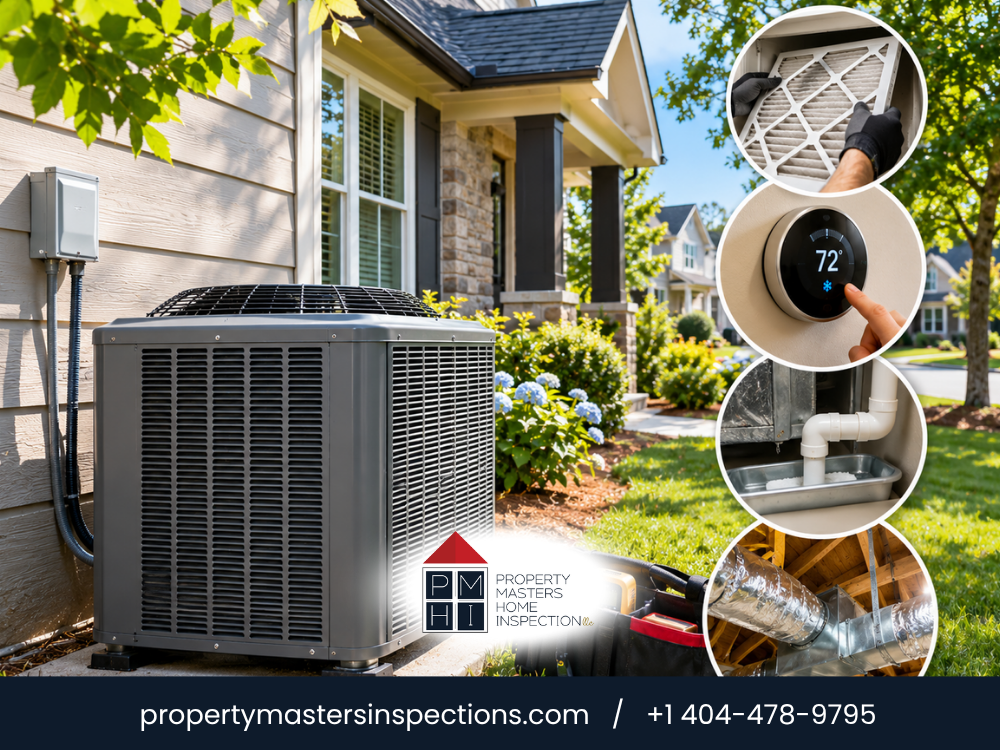
 Summer HVAC Inspection: What Johns Creek Homeowners Should Know
Summer temperatures in Johns Creek, Georgia, place increased demands on residential heating, ventilation, and air conditioning (HVAC) systems. As outdoor temperatures rise, air conditioners often run for longer periods to maintain comfortable indoor conditions.
Although an HVAC system may appear to be operating normally, seasonal use can reveal changes in airflow, cooling performance, condensate drainage, and equipment condition.
For homeowners in Johns Creek, Alpharetta, Roswell, and surrounding North Atlanta communities, understanding what an HVAC inspection includes can help identify maintenance needs and support reliable cooling throughout the summer.
A common homeowner question is: What should be checked during a summer HVAC inspection in Johns Creek?
1. Check Air Conditioning Performance During Summer
Air conditioning systems work harder during extended periods of warm weather.
A system that operates continuously without maintaining the desired indoor temperature may need further evaluation.
Homeowners should pay attention to:
- Uneven temperatures between rooms
- Longer cooling cycles than usual
- Reduced airflow from supply vents
- Unusual operating sounds
- Changes in indoor comfort
During a professional home inspection, accessible HVAC equipment may be operated using normal controls to assess its basic functionality.
A general home inspection does not replace a comprehensive HVAC service evaluation, but it can document observable conditions that warrant attention.
2. Inspect Air Filters And Airflow
Airflow plays an important role in maintaining indoor comfort and supporting HVAC performance.
When air filters become heavily loaded with dust and debris, airflow through the system may decrease.
Johns Creek homeowners should regularly check:
- Air filter condition
- Supply and return air vents
- Furniture obstructing registers
- Visible duct connections
- Airflow differences between rooms
Replacing filters according to manufacturer recommendations and keeping vents unobstructed can support consistent airflow.
If certain rooms remain noticeably warmer than others, an HVAC technician can evaluate system balancing, ductwork, and equipment performance.
3. Examine The Outdoor Air Conditioning Unit
Outdoor condenser units are exposed to landscaping, rain, airborne debris, and seasonal weather.
During summer, vegetation can grow close to the equipment and restrict airflow.
Homeowners can visually check for:
- Leaves or grass clippings around the unit
- Vegetation growing near condenser coils
- Unusual operating sounds
- Visible cabinet or component deterioration
- Obstructions around the equipment
Maintaining clearance according to manufacturer specifications helps support proper operation.
Electrical panels, refrigerant components, and internal equipment should be evaluated by qualified HVAC professionals.
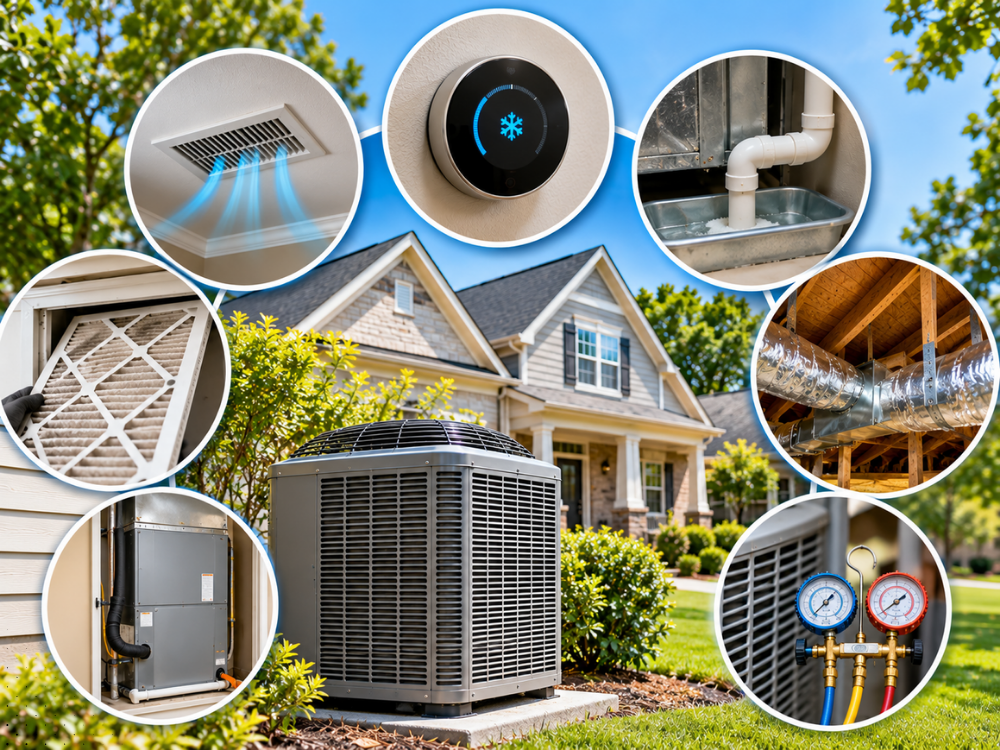 4. Monitor Condensate Drainage
Air conditioning systems remove moisture from indoor air as part of the cooling process.
This moisture typically collects in a drain pan and exits through a condensate drain line.
During periods of heavy summer use, homeowners should watch for:
- Water collecting near indoor HVAC equipment
- Staining around the air handler
- Overflowing condensate pans
- Unusual moisture around drain connections
- Cooling interruptions associated with condensate safety switches
Condensate drainage is particularly relevant during Georgia’s humid summer months.
A professional home inspector may identify visible drainage concerns, while an HVAC technician can service the condensate system.
5. Review Attic Ductwork And Insulation
Many North Atlanta homes have HVAC ductwork installed in attic spaces.
During summer, attic temperatures can become substantially warmer than conditioned living areas.
Accessible ductwork should be reviewed for visible conditions such as:
- Disconnected duct sections
- Deteriorated insulation
- Compressed flexible ducts
- Unsupported duct runs
- Visible condensation around duct surfaces
These conditions may affect airflow or contribute to temperature differences throughout the home.
A home inspection can document visible ductwork conditions and recommend further evaluation when appropriate.
6. Understand The Difference Between A Home Inspection And Hvac Maintenance
A professional home inspection and an HVAC service appointment serve different purposes.
A home inspector generally evaluates accessible components and observes how equipment responds to normal operating controls.
An HVAC technician can perform specialized procedures, including refrigerant testing, electrical measurements, detailed performance diagnostics, and equipment servicing.
For homeowners purchasing an older property in Johns Creek, both evaluations may provide useful information.
A general home inspection offers an overview of multiple home systems, while an HVAC service evaluation focuses specifically on mechanical equipment.
7. When Should Johns Creek Homeowners Schedule An Hvac Inspection?
A home inspection may be helpful when:
- Purchasing a home during summer
- Preparing a property for sale
- Evaluating an older home with multiple HVAC systems
- Planning annual home maintenance
- Reviewing accessible equipment before a builder warranty expires
Summer inspections can also provide insight into how cooling equipment performs during seasonal use, subject to the inspection’s scope and operating conditions.
Summer HVAC performance is an important consideration for homeowners in Johns Creek and surrounding North Atlanta communities.
Monitoring airflow, maintaining air filters, checking outdoor equipment, and observing condensate drainage can help homeowners better understand their cooling systems.
A professional home inspection provides an additional opportunity to evaluate accessible HVAC components alongside other major home systems.
Schedule your home inspection with Property Masters Home Inspections, LLC to learn more about your home’s condition this summer.