
 New Construction Home Inspection In Johns Creek, GA: Why Buyers Should Schedule One
Buying a newly constructed home in Johns Creek, Georgia, is an exciting milestone. New homes often feature modern floor plans, updated building materials, energy-efficient equipment, and contemporary finishes.
However, new construction does not eliminate the value of an independent home inspection.
A newly completed property contains many interconnected systems, including roofing, plumbing, electrical components, HVAC equipment, insulation, and structural elements. These systems should be evaluated for observable installation and operating conditions before the buyer takes possession.
For buyers purchasing new construction in Johns Creek or surrounding North Fulton County communities, a professional home inspection provides additional information about the property beyond the builder’s final walkthrough.
One common question is: Do you need a home inspection on a new construction home in Johns Creek, GA?
1. Why Inspect a Newly Built Home?
New homes are constructed through multiple stages involving different trades and contractors.
Roofing, electrical, plumbing, HVAC, insulation, and finishing work must be coordinated throughout the construction process.
Municipal building inspections serve an important role in evaluating applicable code requirements at designated construction stages. However, they are not a substitute for an independent home inspection performed for the buyer.
A professional home inspector evaluates accessible components at the time of the appointment and documents observable conditions.
This can provide buyers with a broader understanding of the completed property’s condition.
2. Roofing and Exterior Components
New construction roofing systems should be evaluated for visible installation and material conditions.
During a home inspection, accessible exterior components may include:
- Roof coverings
- Flashing and roof penetrations
- Gutters and downspouts
- Exterior siding and trim
- Windows and exterior doors
- Decks, porches, and attached structures
Inspectors may document visible conditions that warrant maintenance, correction, or additional evaluation.
The inspection is visual and does not guarantee that every concealed installation detail meets applicable construction standards.
3. Electrical System Inspection
Newly installed electrical systems contain multiple components that should operate as intended.
A professional home inspection may include evaluating:
- Accessible electrical panels
- Circuit breakers
- Receptacles and switches
- Installed lighting
- GFCI and AFCI protection, where applicable
- Visible wiring and connections
Inspectors use appropriate non-invasive methods within the inspection scope.
Specialized electrical testing and corrective work should be performed by qualified electricians.
4. Plumbing Fixtures and Water Distribution
New construction plumbing systems include supply piping, drainage components, fixtures, and water-heating equipment.
During an inspection, accessible plumbing components may be reviewed for:
- Visible leaks
- Fixture operation
- Functional drainage
- Water heater installation
- Accessible supply connections
- Toilets, sinks, tubs, and showers
The inspector documents observable conditions and may recommend further evaluation where appropriate.
5. HVAC Equipment and Ventilation
Heating and cooling systems are important components of new homes in Johns Creek.
Depending on the property’s design, a home may have one or multiple HVAC systems.
During a new construction home inspection, accessible equipment may be evaluated for:
- Thermostat operation
- Heating and cooling functionality
- Airflow at accessible registers
- Visible ductwork
- Air filter condition
- Condensate drainage
A home inspection is not a substitute for commissioning, system balancing, or specialized HVAC performance testing.
Those procedures may require qualified HVAC technicians.
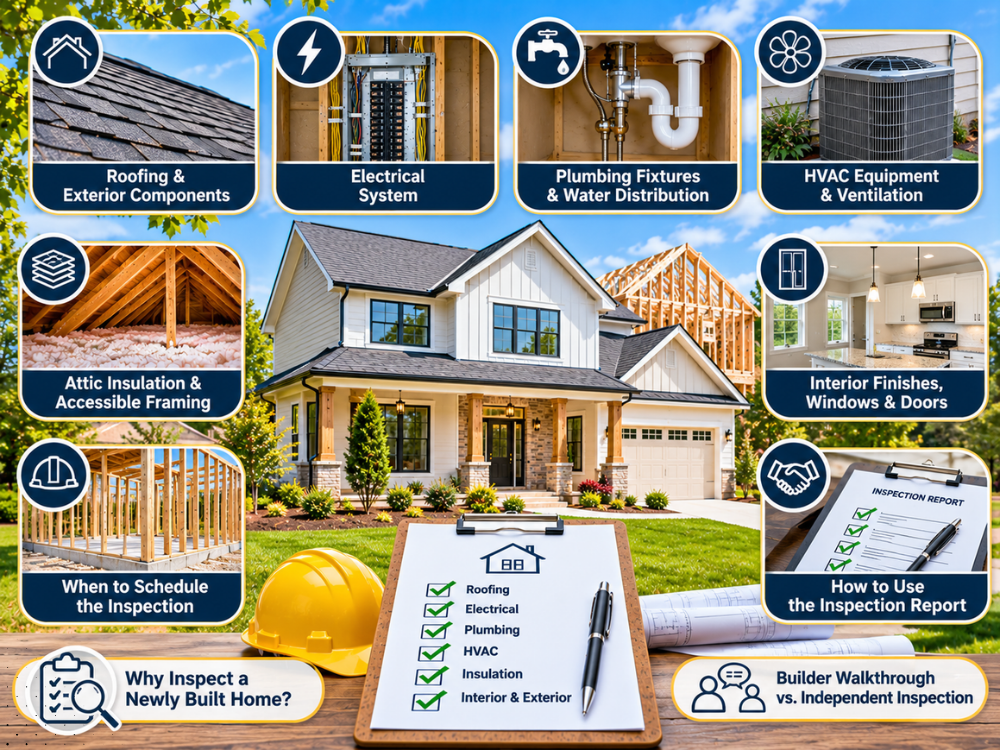 6. Attic Insulation and Accessible Framing
Attic spaces can provide information about visible insulation, ventilation, and framing conditions.
During an inspection, accessible attic areas may include:
- Insulation coverage
- Roof framing
- Ventilation openings
- Accessible ductwork
- Exhaust fan terminations
- Visible moisture conditions
The inspector documents observable findings within the inspection scope.
Some installation details may be concealed once construction is complete, which is one reason buyers may also consider inspections at earlier construction stages.
7. Interior Finishes, Windows, and Doors
New construction buyers often pay close attention to interior finishes during the final walkthrough.
A professional home inspection may evaluate accessible:
- Windows and doors
- Stairways and railings
- Interior walls and ceilings
- Flooring
- Cabinets and countertops
- Installed appliances included in the inspection agreement
The inspector may identify functional or visible installation conditions that the buyer can discuss with the builder.
Cosmetic walkthrough items and the home inspector’s findings may overlap, but they are not necessarily the same.
8. When Should Buyers Schedule a New Construction Inspection?
The appropriate inspection schedule depends on the stage of construction and the services available.
Common opportunities include:
Pre-drywall inspection: Conducted before walls and ceilings are covered, allowing accessible framing, plumbing, electrical, and other components to be observed.
Final new construction inspection: Conducted when the home is substantially complete, often before the buyer’s final walkthrough or closing.
Builder warranty inspection: Conducted before an applicable builder warranty deadline, often around the eleventh month of ownership.
Buyers should confirm which inspection types their provider offers and coordinate access with the builder.
9. Does a Builder Walkthrough Replace an Independent Inspection?
A builder walkthrough generally introduces the buyer to the home’s features, equipment, finishes, and maintenance requirements.
An independent home inspection serves a different purpose.
The inspector evaluates accessible systems and documents observable conditions from the buyer’s perspective.
Both activities can provide useful information, but neither guarantees that every condition will be identified.
10. How Buyers Can Use the Inspection Report
After receiving the inspection report, buyers can review documented observations and determine whether additional information is needed.
The report may help buyers:
- Ask the builder about specific conditions
- Request clarification about installation details
- Arrange specialized evaluations
- Organize maintenance documentation
- Prepare for ownership
Buyers should review applicable purchase agreement provisions and builder procedures when discussing inspection findings.
A newly constructed home in Johns Creek contains numerous systems and components that contribute to the property’s overall condition.
A professional new construction home inspection provides an independent visual evaluation of accessible roofing, plumbing, electrical systems, HVAC equipment, insulation, structural components, and interior areas.
For buyers preparing to close on a newly built property, this information can support informed discussions and future maintenance planning.
Property Masters Home Inspections, LLC serves homebuyers throughout Johns Creek, GA, and surrounding North Atlanta communities.
Contact Property Masters Home Inspections, LLC to discuss your new construction inspection needs and confirm available inspection services.
Call 404-478-9795 or visit https://propertymastersinspections.com/ to book online today!