
Published: November 2026
North Atlanta does not get long, brutal winters. It gets something that can be challenging for a home’s heating equipment in a different way: months of barely running the heat, followed by a handful of genuinely cold nights when everyone needs it at once.
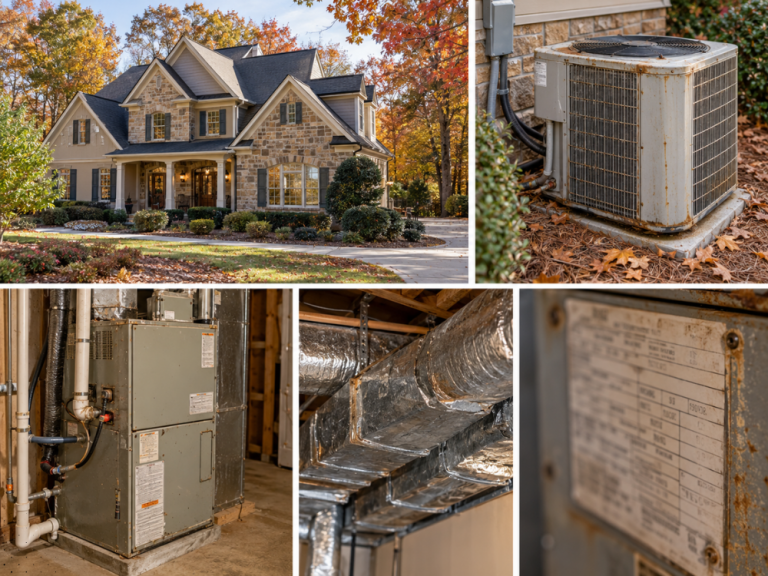
A heating system inspection in Johns Creek, GA, helps homebuyers understand how a furnace or heat pump operates, whether visible components show signs of wear, and which conditions may need further evaluation before closing.
If you are buying a home in Johns Creek, Alpharetta, Duluth, or another North Atlanta community this fall or winter, the home inspection is an opportunity to evaluate the heating equipment before you depend on it.
Here is what a home inspector checks, what the inspection cannot determine, and how to use the findings during your home purchase.
Why Does the Heating System Deserve Extra Attention in North Atlanta?
North Atlanta’s relatively mild winters can mean long stretches when a home’s heating system receives limited use.
A furnace or heat pump may operate normally during occasional cool mornings but develop noticeable performance issues when temperatures fall and the system runs for longer periods.
Heating equipment can also show age-related wear even when it has relatively few operating hours.
For buyers, a fall or winter home inspection provides an opportunity to observe the system operating under seasonal conditions.
A home inspector can evaluate accessible components, check basic heating performance, document visible conditions, and recommend additional evaluation when appropriate.
However, an inspection cannot guarantee that equipment will perform without interruption during future cold weather.
What Types of Heating Systems Are Common in Johns Creek Homes?
Homes in Johns Creek and surrounding North Atlanta communities may use several types of residential heating equipment.
The three common configurations are:
Gas furnaces: Often installed in an attic, basement, or utility closet and paired with a central air conditioning system.
Heat pumps: Systems that provide both heating and cooling through the same outdoor equipment, commonly supported by electric auxiliary heat.
Dual-fuel systems: Configurations that combine a heat pump with a gas furnace and switch heating sources based on system settings and outdoor conditions.
Larger homes may have two or more HVAC systems serving separate floors or zones.
Each system has its own equipment age, maintenance history, and operating condition. During a home inspection, accessible systems are evaluated individually.
Understanding which equipment serves each part of the property can also help buyers plan future maintenance.
What Does a Home Inspector Check on a Gas Furnace?
A gas furnace inspection focuses on basic operation, accessible components, venting, combustion air, and visible conditions that may indicate the need for professional HVAC service.
1. Furnace Operation and Heating Performance
The inspector typically raises the thermostat to call for heat and observes the furnace’s normal operating sequence.
This includes checking whether:
The heating system responds to thermostat settings.
The burners ignite and the furnace operates.
The blower distributes heated air.
Warm air reaches the living spaces.
The system operates without unusual noises or repeated shutdowns.
A furnace that repeatedly starts and stops, fails to produce adequate heat, or makes unusual operating noises may require further evaluation.
A standard home inspection assesses observable performance at the time of inspection rather than conducting an extended heating-capacity test.
2. Furnace Venting and Flue Connections
Proper venting is an important safety consideration for gas-fired heating equipment.
The inspector examines visible and accessible portions of the venting system for conditions such as:
Loose or disconnected vent pipes.
Improperly supported venting.
Visible corrosion or deterioration.
Gaps or separations at accessible connections.
Inadequate clearance from combustible materials.
Visible venting configurations that may require correction.
Some high-efficiency furnaces use specialized plastic vent piping and produce condensate during operation.
Where accessible, the inspector may also review condensate drainage components and associated equipment.
Because improper combustion or venting can create carbon monoxide concerns, suspected defects should be evaluated by a qualified HVAC professional.
3. Combustion Air and Equipment Clearances
Gas furnaces require appropriate combustion air for safe operation.
During a home inspection, the inspector looks for visible conditions that may interfere with airflow or equipment access.
For example, a furnace installed inside a utility closet may have stored belongings blocking ventilation openings or limiting required clearances.
These conditions can be documented in the inspection report for correction or further evaluation.
4. Gas Supply Connections
The inspector reviews accessible gas supply components, including the appliance shutoff valve, visible piping, and connectors.
The inspection may identify visible concerns such as improper connections, deterioration, or unsupported piping.
A standard home inspection is not a comprehensive gas piping pressure test.
Suspected gas leaks or unsafe connections require evaluation by a qualified professional.
5. Furnace Filters and Cabinet Condition
The inspector also reviews accessible portions of the furnace cabinet and filter installation.
Common observations may include:
Dirty or missing air filters.
Rust or corrosion.
Water staining.
Evidence of previous moisture accumulation.
Visible scorching or signs of overheating.
General equipment condition.
These observations provide useful maintenance information and indicate whether additional servicing may be appropriate.

What Does a Home Inspector Check on a Heat Pump?
A heat pump inspection evaluates heating operation and the visible condition of the indoor and outdoor equipment.
Because a heat pump provides both heating and cooling, its operating limitations depend partly on outdoor temperature and manufacturer recommendations.
Heating Mode Operation
The inspector operates the system using normal controls and observes whether it responds to a call for heat.
This includes checking whether the equipment starts and whether heated air is delivered to the living spaces.
A standard inspection does not measure the system’s complete heating capacity under every possible outdoor condition.
Auxiliary and Emergency Heat
Many residential heat pumps use auxiliary electric heating elements to supplement the system during colder weather.
Where appropriate and accessible through normal controls, the inspector may evaluate auxiliary or emergency heating operation.
The inspection report can identify operating concerns that warrant further HVAC evaluation.
Outdoor Heat Pump Equipment
The outdoor unit is reviewed for visible conditions that may affect performance.
These may include:
Unstable or uneven mounting.
Leaves or debris restricting airflow.
Damaged condenser coil fins.
Deteriorated refrigerant line insulation.
Vegetation too close to the equipment.
Visible deterioration of accessible components.
Maintaining appropriate airflow around outdoor equipment is an important part of routine HVAC care.
Indoor Air Handler and Condensate Drainage
The inspector examines accessible portions of the indoor air handler for visible conditions such as rust, water staining, condensate drainage issues, and wiring concerns.
Water accumulation around equipment may indicate that drainage components need maintenance or further evaluation.
Can Cooling Mode Be Tested During a Winter Inspection?
Not always.
Operating air conditioning equipment in cooling mode during cold outdoor conditions may be inappropriate for certain systems and can potentially harm equipment.
For that reason, a home inspector may limit testing based on outdoor temperature, manufacturer instructions, and the equipment’s operating conditions.
If cooling is not tested, the inspection report should document that limitation.
Buyers can request previous HVAC maintenance records and consider a separate contractor evaluation when additional information about cooling performance is needed.
Does a Home Inspection Include Ductwork and Thermostats?
Yes. A standard home inspection generally includes a visual review of accessible heating distribution components and basic thermostat operation.
The furnace or heat pump produces the heat, but ductwork helps distribute conditioned air throughout the home.
Accessible Ductwork
In North Atlanta homes, heating and cooling ducts may run through attics, crawl spaces, or other concealed areas.
Where visible and accessible, the inspector looks for:
Disconnected duct sections.
Crushed or kinked flexible ductwork.
Torn or deteriorated duct insulation.
Poorly supported duct runs.
Ductwork resting directly on crawl space soil.
Visible conditions that may restrict airflow.
A room that remains noticeably cooler than other areas may have a duct distribution issue, although other factors can also affect room temperature.
A home inspection can document visible concerns, but specialized airflow measurements and duct leakage testing require additional equipment and procedures.
Thermostats and Multiple HVAC Zones
The inspector operates accessible thermostats using normal controls to check whether the associated heating equipment responds.
In larger homes with multiple HVAC systems or zones, each accessible system is evaluated separately.
This is particularly useful when different floors have independent heating equipment.
What Can’t a Standard Home Inspection Tell You About a Furnace?
A home inspection is primarily a visual and operational evaluation. It is not a complete HVAC diagnostic service or equipment teardown.
Understanding these limitations helps buyers interpret the inspection report accurately.
Hidden Heat Exchanger Conditions
The heat exchanger separates combustion gases from the air circulated through a gas furnace.
Because much of this component is concealed within the furnace cabinet, a standard home inspection generally cannot establish its complete condition.
A cracked or deteriorated heat exchanger may not be visible during a routine inspection.
If the inspector observes unusual burner operation, significant corrosion, scorching, or other concerning conditions, a qualified HVAC contractor may be recommended for further evaluation.
Specialized HVAC Testing
A standard home inspection generally does not include:
Refrigerant charge measurement.
Detailed combustion analysis.
Internal equipment disassembly.
Comprehensive duct leakage testing.
Full heating-capacity calculations.
Prediction of the equipment’s remaining service life.
These procedures fall outside the typical scope of a general home inspection.
When Should a Buyer Request an HVAC Contractor Evaluation?
Additional evaluation may be appropriate when:
The heating system does not operate properly.
Equipment repeatedly shuts down.
Visible conditions suggest improper venting.
Significant corrosion or overheating is observed.
The system is older and its condition raises questions.
Important equipment functions cannot be tested.
A qualified HVAC contractor can provide more detailed diagnostics and, when appropriate, repair or replacement estimates.
For buyers, obtaining this information during the due diligence period may help clarify the property’s condition before closing.
How Does Heating System Age Affect a Home Inspection?
Equipment age provides useful context, but it does not establish how long a furnace or heat pump will continue operating.
Where the manufacturer’s data plate is accessible and legible, the inspector may be able to determine or estimate the equipment’s manufacturing date.
An older heating system may continue operating satisfactorily for years, while a newer system may require repairs.
Age should therefore be considered alongside observed performance, visible condition, and available maintenance records.
For homebuyers, this information can help answer practical questions:
Has the equipment received regular maintenance?
Are previous service records available?
Has the system required repeated repairs?
Should future replacement be included in the household budget?
Is additional HVAC evaluation appropriate before closing?
An inspection report provides a snapshot of the equipment’s observed condition, not a guarantee of future performance.
What Should Johns Creek Homebuyers Do With Heating Inspection Findings?
Heating inspection findings are easier to evaluate when organized into three categories: safety, function, and future planning.
1. Safety-Related Findings
Conditions involving suspected venting defects, gas supply concerns, or missing carbon monoxide alarms deserve prompt attention.
Homes with fuel-burning appliances, fireplaces, or attached garages should have properly installed and functioning carbon monoxide alarms.
Any suspected unsafe condition should be addressed by an appropriately qualified professional before the system is used.
2. Functional Findings
A heating system that does not operate correctly, produces inadequate heat, or has disconnected ductwork may require further evaluation.
During the home purchase process, buyers can request contractor findings and repair estimates to better understand the situation.
3. Maintenance and Replacement Planning
Equipment age, dirty filters, and other routine maintenance observations may help buyers anticipate future ownership expenses.
Not every observation indicates an immediate repair or replacement is necessary.
Your real estate agent can help explain how inspection findings may be addressed within the terms of your purchase agreement.
Frequently Asked Questions About Heating System Inspections in Johns Creek, GA
Does a home inspection include the heating system?
Yes. A standard home inspection generally includes an evaluation of accessible heating equipment, basic operation, visible venting components, thermostats, and accessible ductwork. The inspector documents observed conditions and identifies items that may need further evaluation. The inspection is not a complete mechanical teardown or specialized HVAC diagnostic service.
Can a home inspector test air conditioning during winter?
It depends on outdoor conditions, the equipment, and manufacturer recommendations. Some air conditioning systems should not be operated in cooling mode when temperatures are too low. When cooling cannot be evaluated, the inspector documents the limitation. Buyers may request maintenance records or arrange additional HVAC evaluation.
Will a home inspection identify a cracked furnace heat exchanger?
Not necessarily. Much of a furnace’s heat exchanger is concealed inside the equipment cabinet. A standard visual inspection may identify observable conditions suggesting a concern, but it cannot reliably detect every internal defect. Suspected heat exchanger issues should be evaluated by a qualified HVAC professional.
Does the home inspector check carbon monoxide alarms?
A home inspector generally checks for the presence of carbon monoxide alarms as required by the applicable inspection standards. The scope of functional testing may vary. Homebuyers should verify proper alarm placement, operation, and replacement dates before occupying the property.
Are both heating systems inspected in a two-story home?
If a home has two separate heating systems, each accessible system is generally evaluated individually using normal operating controls, subject to inspection limitations. The inspector documents observable conditions for each system, including relevant differences in equipment age, operation, and maintenance needs.
Schedule a Home Inspection in Johns Creek, GA
Buying a home during North Atlanta’s cooler months is an opportunity to evaluate heating equipment before the coldest part of the season.
Property Masters Home Inspections provides home inspections in Johns Creek, GA, and surrounding communities, including Alpharetta and Duluth.
A professional home inspection can help you understand the visible condition and basic operation of the property’s heating system, along with other accessible home components.
To schedule your home inspection, call 404-478-9795 or schedule online with Property Masters Home Inspections.

